Practical secrets of residential feng shui: combining physical features and energy principles to create auspicious homes where people and dwellings live in harmony.
Author FateAstro Expert Team
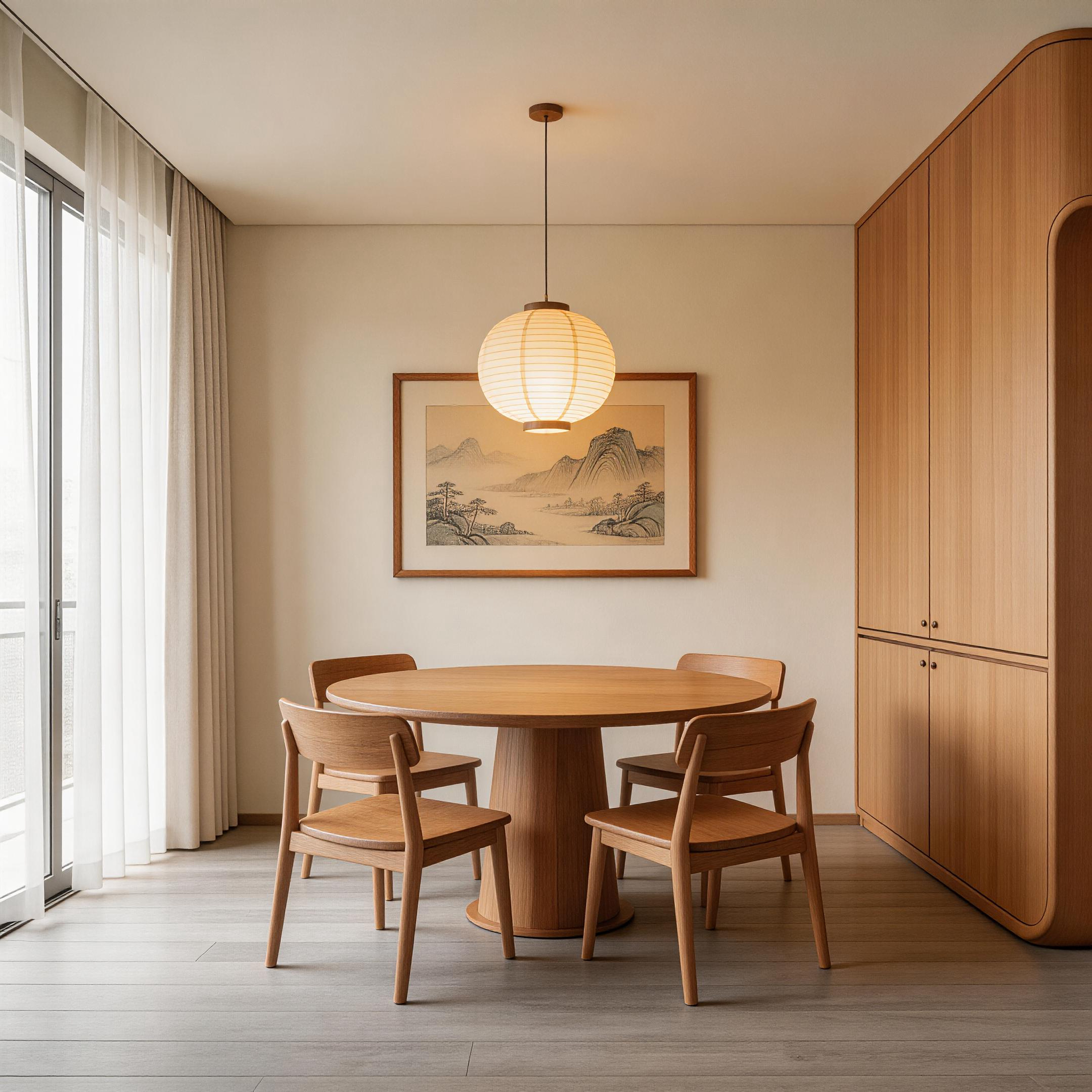
Yangzhai Fengshui is a core branch of Fengshui, emphasizing "gathering and retaining Qi, balancing Yin and Yang, and ensuring harmony between people and their dwellings." Its essence lies in combining the natural environment with spatial layout to optimize the energy interaction between people and their environment, promoting health, family harmony, and good fortune for residents. From 2024 to 2043, the Ninth Period (Li Fire Period) is in effect, with the South (Li Palace) being the auspicious direction. Yangzhai layouts must align with these temporal and spatial characteristics, following the order of "external layout before internal layout, avoiding negative influences before promoting positive ones, considering landforms before energy flow, and considering the overall picture before specific details" to create a harmonious and auspicious dwelling. This article, based on years of practical experience, compiles 88 practical secrets of Yangzhai Fengshui, covering 14 dimensions including site selection, orientation, house shape, door energy, living room, and bedrooms. It balances traditional metaphysics with modern livability, making it easy for beginners to master, avoid Fengshui pitfalls, and optimize their home's energy field.
I. General Principles and Surveying Techniques: The Core Principles of Yangzhai Feng Shui
The quality of a house's feng shui does not depend on the extravagance of its ornaments, but on the harmony of its energy field and the flow of energy. Mastering the following eight core principles is essential to accurately determine the auspiciousness or inauspiciousness of a house's feng shui and lay the foundation for subsequent arrangements.
1. The first principle of auspicious Feng Shui is to ensure that the house is surrounded by support and has an open space in front, with airflow circulating rather than rushing straight towards it. "Surrounding the house" means preventing airflow from rushing directly towards the dwelling, allowing it to circulate and gather within the house; "gathering the energy" means allowing auspicious energy to remain within the house, nourishing the residents and preventing it from dissipating. If the house is not surrounded by support, has a narrow open space, or experiences direct airflow, the energy field will be chaotic, and the residents may experience problems such as irritability and low fortune.
2. The external environment (Luan Tou) is the foundation, while the internal energy (Li Qi) is the application: If external negative influences (such as road intersections, sharp corners, and high-voltage towers) are not eliminated, even the best internal energy configuration will be difficult to change the unfavorable situation; conversely, auspicious external environment can enhance the positive energy configuration. Luan Tou refers to the external environment of a dwelling, such as surrounding mountains, roads, and buildings; Li Qi refers to the internal layout, orientation, and the balance of the five elements within the dwelling. When assessing the feng shui of a dwelling, one must first examine the external Luan Tou, then the internal Li Qi; only by combining both can a comprehensive judgment of auspiciousness or inauspiciousness be made.
3. Avoid before promoting, good fortune follows misfortune: First resolve major negative influences such as through-hall evil, White Tiger raising its head, and overhead beam pressing down, then promote wealth, career, and prosperity. Do not put the cart before the horse. If you promote good fortune before avoiding evil, the negative energy will continue to disrupt the energy field. Even if you place many auspicious objects to attract wealth, they will be ineffective and may even exacerbate the negative effects.
4. Yin-Yang Balance, Harmony of Strength and Softness: The light and shadow, movement and stillness, solidity and emptiness, water and fire within a dwelling must be balanced. Avoid an excess of Yang (too bright or too dry) or an excess of Yin (too dark or too damp). An excess of Yang can make residents irritable and easily angered, while an excess of Yin can lead to depression and impaired health. For example, the living room should be bright (Yang), while the bedroom should be soft (Yin); active areas (living room, kitchen) and quiet areas (bedroom, study) should be separated to avoid clashes between activity and stillness.
5. Harmony between people and dwelling, with people as the core: The type, orientation, and layout of the house should match the resident's birth chart (Ba Zi) favorable elements and lifestyle habits. There is no absolutely auspicious house, only a suitable one. For example, if the resident's birth chart favors fire, the house can use more warm colors such as red and purple, and place fire-related ornaments; if the resident's birth chart favors water, blue decorations can be added appropriately, and flowing water features can be placed to harmonize the energy of the person and the house, maximizing the effectiveness of Feng Shui.
6. Time and Space Iteration, the Ninth Period Takes the Lead: 2024-2043 is the Ninth Period of Fire (Li). The South (Li Palace) is the prosperous direction, which should be activated rather than suppressed; the North (Kan Palace) is the declining direction, which should be kept still rather than disturbed. The Ninth Period of Fire (Li) governs light, civilization, and interpersonal relationships. The layout of a residence should focus on activating the energy field in the South and avoiding the negative energy in the North, in accordance with the characteristics of time and space, in order to boost the family's fortune.
7. From outside to inside, from far to near: The order of surveying the feng shui of a residence is "surrounding environment → building → unit door → entrance door → interior zoning → details and furnishings," progressing layer by layer to comprehensively check for both auspicious and inauspicious energies. Many people neglect the external environment and only focus on the internal layout, resulting in the inability to optimize the energy field of the residence, and even the situation of "auspicious inside but inauspicious outside."
8. Cleanliness, brightness, quietness, and unobstructed flow: These four essentials are essential for a good Feng Shui home. A clean and tidy interior, adequate lighting, quietness, and unobstructed flow are the foundation of good Feng Shui. Comfort is the essence of Feng Shui. If a house is cluttered, dark, damp, noisy, and has blocked flow, even the best layout will result in stagnant energy, affecting the health and fortune of the residents.
II. External Site Selection and Building Construction: The Foundation of Auspicious Feng Shui for Dwellings
The external environment is the foundation of residential feng shui. The location of a building and its surrounding environment directly determine the quality of the energy field of the residence. Avoiding negative external influences is essential to laying a good foundation for the internal layout. The following 10 practical tips will teach you how to choose the right building and the right external environment.
1. Solid Backing and Open Front: A house with a solid backing (such as a building or mountain) and an open, unobstructed view in front conforms to the feng shui pattern of "Vermilion Bird in Front, Black Tortoise Behind." "Black Tortoise Behind" symbolizes a stable career and the assistance of benefactors; "Vermilion Bird in Front" symbolizes abundant wealth and a bright future. If a house has no support behind it and a narrow front, it can lead to an unstable career foundation and difficulty in accumulating wealth for its residents.
2. The Azure Dragon should be high, the White Tiger low: In a house, the left side (Azure Dragon position) should be higher (e.g., tall buildings, greenery), while the right side (White Tiger position) should be lower. It's unfavorable for the White Tiger to "raise its head" (tall buildings, sharp corners, large trees, etc. on the right side being higher than the left). The Azure Dragon position governs benefactors and wealth, while the White Tiger position governs villains and gossip. A high Azure Dragon and a low White Tiger signify the assistance of benefactors and the avoidance of villains, leading to smooth fortune for the family. A raised White Tiger, however, easily triggers gossip, interpersonal conflicts, and may even affect the health of family members.
3. A Bright Hall Like the Palm of Your Hand: The area in front of a house (the Bright Hall) should ideally be slightly concave, like the palm of your hand, open and expansive. Avoid narrow, cramped spaces or roads curving in the opposite direction. The Bright Hall is the core area for a house to gather energy. An open Bright Hall makes it easier for wealth to accumulate, leading to prosperous fortune for the residents. A narrow Bright Hall or a road curving in the opposite direction will cause wealth to dissipate and negative energy to rush in, affecting the family's fortune.
4. Embracing Water Brings Abundant Wealth: Roads and waterways in front of the house should form an embracing shape (like a jade belt around the waist). Avoid straight lines, reverse curves, and dead ends. Water flowing in a prosperous direction brings wealth. Feng Shui believes that "water governs wealth." Embracing roads and waterways allow wealth to circulate and accumulate, helping the family's fortune to last. Straight lines and reverse curves allow wealth to flow in and out directly, while dead ends cause wealth to stagnate, hindering financial growth.
5. Avoid negative formations pointing directly at the site; keep a safe distance: Avoid roads pointing directly at the site, sharp corners, high-voltage towers, substations, hospitals, cemeteries, garbage dumps, and other similar negative formations. The straight-line distance should ideally exceed 30 meters. These types of negative formations release negative energy, polluting the energy field of the dwelling and causing health problems and bad luck for residents. For example, roads pointing directly at the site are associated with accidents, hospitals with foul air, and high-voltage towers with radiation; these should be avoided as much as possible.
6. Square Buildings, Missing Corners are Undesirable: A building should ideally be square overall, avoiding large missing corners, especially in the northwest (Father), southwest (Mother), and northeast (Child). A square building maintains a balanced energy field, which is beneficial for family harmony and stable fortune. Missing corners, on the other hand, lead to an imbalance of energy. Different missing corners in different directions have different negative effects; for example, a missing northwest corner affects the male head of the household's career, a missing southwest corner affects the female head of the household's health, and a missing northeast corner affects the children's fortune.
7. Suitable ceiling height and ample Yang energy: The ceiling height of a residence should not be less than 2.7 meters. Too low a ceiling will make the space feel oppressive and dissipate energy, while too high a ceiling will make the space feel too empty and difficult to gather auspicious energy, thus affecting the family's fortune.
8. Proper building spacing and adequate lighting: Ground floor buildings should receive at least one hour of sunlight on the winter solstice to avoid excessive yin and yang imbalances and excessive dampness caused by buildings being too close together. Sunlight is the primary source of yang energy in a dwelling; sufficient yang energy results in a vigorous energy field, promoting health and well-being for residents; conversely, an imbalance of yin and yang can easily breed foul air, leading to health problems and depression among residents.
9. Avoid concave winds and protect the energy: Avoid concave winds (winds penetrating valleys) in front, behind, to the left, to the right, or above the house. Concave winds entering the house will cause the family's fortune to decline and the number of descendants to decrease. Concave winds will cause the energy field of the house to dissipate and make it difficult to gather energy. Long-term residence will cause the family's fortune to decline and their health to be damaged. Such areas should be avoided when choosing a site.
10. Choosing a Direction During the Ninth Period: The South is Favorable. During the Ninth Period, buildings should ideally face south (sitting north) or southwest (sitting northeast), prioritizing the absorption of the prosperous fire energy from the south. A north-facing house receives ample sunlight and abundant yang energy, aligning with the fire element characteristics of the Ninth Period, which can boost the family's career and interpersonal relationships. A northeast-facing house, on the other hand, takes into account the stable energy field of the northeast, contributing to the family's wealth and health.
III. Orientation and House Shape: The Core Framework of the Yang House's Qi Field
The orientation and shape of a house determine the distribution of energy in the room. Only with a correct orientation and a square shape can the energy flow in a balanced way and avoid the adverse effects of an unbalanced energy field. The following 8 practical tips will teach you how to optimize the orientation and shape of your house.
1. Square House Shape, Balanced Energy: A square house shape is desirable, while triangular, irregular, or knife-handle shaped houses are undesirable. Irregularly shaped houses can easily lead to energy imbalance, family discord, and blocked fortune. A square house shape allows for smooth airflow and a balanced energy field, which is conducive to family harmony and the accumulation of wealth; an irregularly shaped house shape will cause poor air circulation, forming negative energy, which will affect the health and fortune of the residents.
2. Remedies for Missing Corners: If a house has missing corners, the corresponding elements should be supplemented to balance the energy field. For a missing northwest corner, place a Taishan stone (metal element) to enhance the male head of the household's career energy; for a missing southwest corner, place a yellow jade (earth element) to protect the female head of the household's health; for a missing northeast corner, place a copper gourd (earth element) to boost the children's fortune; for a missing southeast corner, place green plants (wood element) to enhance academic luck; and for a missing east corner, place wooden ornaments (wood element) to enhance the family's health energy.
3. The central area is the core and should be free from pollution and oppression: The center of a house (the Taiji point) should not have a toilet, kitchen, or exposed beams. It should be spacious and unobstructed; clutter will lead to instability in the family's fortune. The central area is the core of the house's energy field. If a toilet or kitchen is located there, the foul air will pollute the entire energy field. If there is an exposed beam overhead, it will cause the energy field to be oppressive, affecting the family's fortune and health. The central area needs to be kept spacious and clean to allow the energy field to flow smoothly.
4. Smooth Traffic Flow, Avoiding Through-Traffic and Detours: The traffic flow from the entrance door to the living room and bedrooms should be straight and not through-traffic, avoiding detours and twists. Smooth airflow ensures smooth fortune. Blocked or detour-like traffic flow will cause stagnation, making it difficult for wealth to enter and for negative energy to leave, affecting the family's fortune; a smooth traffic flow allows auspicious energy to flow smoothly to all areas, nourishing the residents.
5. Separate active and quiet areas to avoid interference: Separate active areas (living room, kitchen, dining room) from quiet areas (bedroom, study) to avoid conflict between them affecting rest. Active areas have a lively energy field, while quiet areas need to be quiet. If active and quiet areas are too close to each other, the energy field in the quiet area will be disturbed, making it difficult for residents to rest. In the long run, this will affect their health and mood.
6. Water and Fire in Harmony, Avoid Cross-Shaped Formations: The kitchen (fire) and bathroom (water) should not be directly opposite each other, forming a "water-fire cross" pattern, which is believed to harm health and wealth. The kitchen represents fire, and the bathroom represents water; their opposition leads to an imbalance of energy, causing health problems and financial obstacles for family members. Therefore, their placement should avoid direct alignment; screens or green plants can be used to buffer the energy flow.
7. Moderate size, harmonious living and occupancy: The size of the house should match the number of residents. If it is too large, it will be difficult to gather positive energy; if it is too small, it will be crowded and dissipate positive energy. The ideal area per person is 25-35 square meters. A house that is too large and has few residents will result in insufficient positive energy and an empty space, making it difficult to gather positive energy. A house that is too small and has crowded living conditions will result in stagnant energy and the accumulation of negative energy, both of which are detrimental to the family's fortune.
8. Auspicious Orientation, Avoiding Directions from Inauspicious Directions: The orientation of a house should be determined by combining the Nine Palaces Flying Stars with the resident's birth chart and favorable elements. Prioritize auspicious directions and avoid facing inauspicious directions or areas that clash with them. During the Ninth Period, the south is the prosperous direction, so it's advisable to face south to absorb this prosperous energy. Avoid facing north (the declining direction), roads directly facing the house, sharp corners, or other inauspicious directions to prevent negative energy from directly impacting the family's fortune.
IV. Front Door and Foyer: The Key Gateway for Gathering Qi in a Dwelling
The front door is the "qi inlet" of a house, and the foyer is the buffer zone for qi intake. The layout of the two directly determines whether auspicious qi can enter the house smoothly and whether inauspicious qi can be blocked. The following 8 practical tips will teach you how to optimize the layout of the front door and foyer.
1. The door is the entrance for Qi (energy) and determines the prosperity or decline of a house: The main entrance should ideally be located in an auspicious direction of the house, and should not be located in an inauspicious or unfavorable direction. Opening the door in an auspicious direction can absorb positive Qi and boost the family's fortune; opening the door in an inauspicious or unfavorable direction will absorb negative Qi, leading to a decline in the family's fortune and health. The auspicious direction of the main entrance can be determined by combining the Nine Palaces Flying Stars and the birth chart of the residents.
2. A moderately sized door is essential; a small house with a large door will lead to financial loss: The size of the entrance door should be in proportion to the building and the apartment layout. It should not be too large or too small. A door that is too large will dissipate positive energy, while a door that is too small will obstruct it. An entrance door that is too large will cause auspicious energy to dissipate, making it difficult to accumulate wealth; an entrance door that is too small will cause auspicious energy to stagnate, making it difficult for wealth to enter. The door width should ideally be 1.2-1.5 meters, and the height should ideally be 2.1-2.4 meters, in proportion to the apartment layout.
3. Avoid "Through-the-Hall Sha" (穿堂煞): If the front door faces a balcony, window, or back door directly, it is considered "Through-the-Hall Sha." A screen, partition, or green plants should be installed to block the flow of energy, allowing it to circulate and accumulate wealth. "Through-the-Hall Sha" causes auspicious energy to flow straight in and out, making it difficult to accumulate, leading to the dissipation of wealth and fluctuations in the family's fortune. Setting up a screen or partition can buffer the airflow, allowing auspicious energy to circulate and gather.
4. When two doors face each other, one must yield: The front door should not face directly opposite a neighbor's door or an interior door. It is advisable to use a door curtain, five-emperor coins, or green plants to buffer the energy flow. Two doors facing each other can cause a clash of energies, leading to conflicts with neighbors and family disputes. It also makes it difficult for wealth to accumulate. Using a door curtain or five-emperor coins to buffer the energy flow can resolve the clash and maintain harmony.
5. A bright and well-lit entryway is essential; avoid darkness and clutter: The entryway should be well-lit and free of clutter. Warm-toned lighting is recommended to activate the energy flow at the entrance. A dark entryway leads to insufficient Yang energy and the accumulation of negative energy, hindering the entry of auspicious energy. Clutter obstructs airflow, causing stagnation. Warm-toned lighting enhances Yang energy, activates the energy flow, and helps accumulate wealth.
6. A threshold is advisable to block negative energy and gather positive energy: A threshold of 5-8cm is suitable for the entrance door. It should not be too high. It blocks negative energy from the outside and gathers auspicious energy inside. The threshold can prevent negative energy and foul air from entering the house, while gathering auspicious energy inside and preventing wealth from leaking out. A threshold that is too high will affect passage and will also cause stagnation of energy. 5-8cm is appropriate.
7. Greenery is beneficial near the door to bring vitality and good fortune: Place green plants (such as money trees or lucky bamboo) on the left side of the entrance door (the Azure Dragon position) to enhance vitality. Avoid placing thorny plants. The Azure Dragon position governs benefactors and wealth. Placing broad-leaved green plants can enhance vitality and boost luck in benefactors and wealth. Thorny plants can generate negative energy and cause gossip and disputes, so they should be avoided.
8. Upon entering the house, one should see auspicious objects and avoid inauspicious ones: It is auspicious to see the living room, green plants, calligraphy and paintings, etc., upon opening the door. Avoid seeing inauspicious objects such as bathrooms, kitchens, beams, and sharp corners. Seeing auspicious objects upon entering signifies good fortune entering the house and smooth sailing for the family; seeing inauspicious objects allows negative energy to directly enter the house, affecting the health and fortune of the family members.
Related Articles
Continue Learning
Next Article