A comprehensive understanding of the energy of the living environment, from Qi to the Five Elements.
Author FateAstro Expert Team
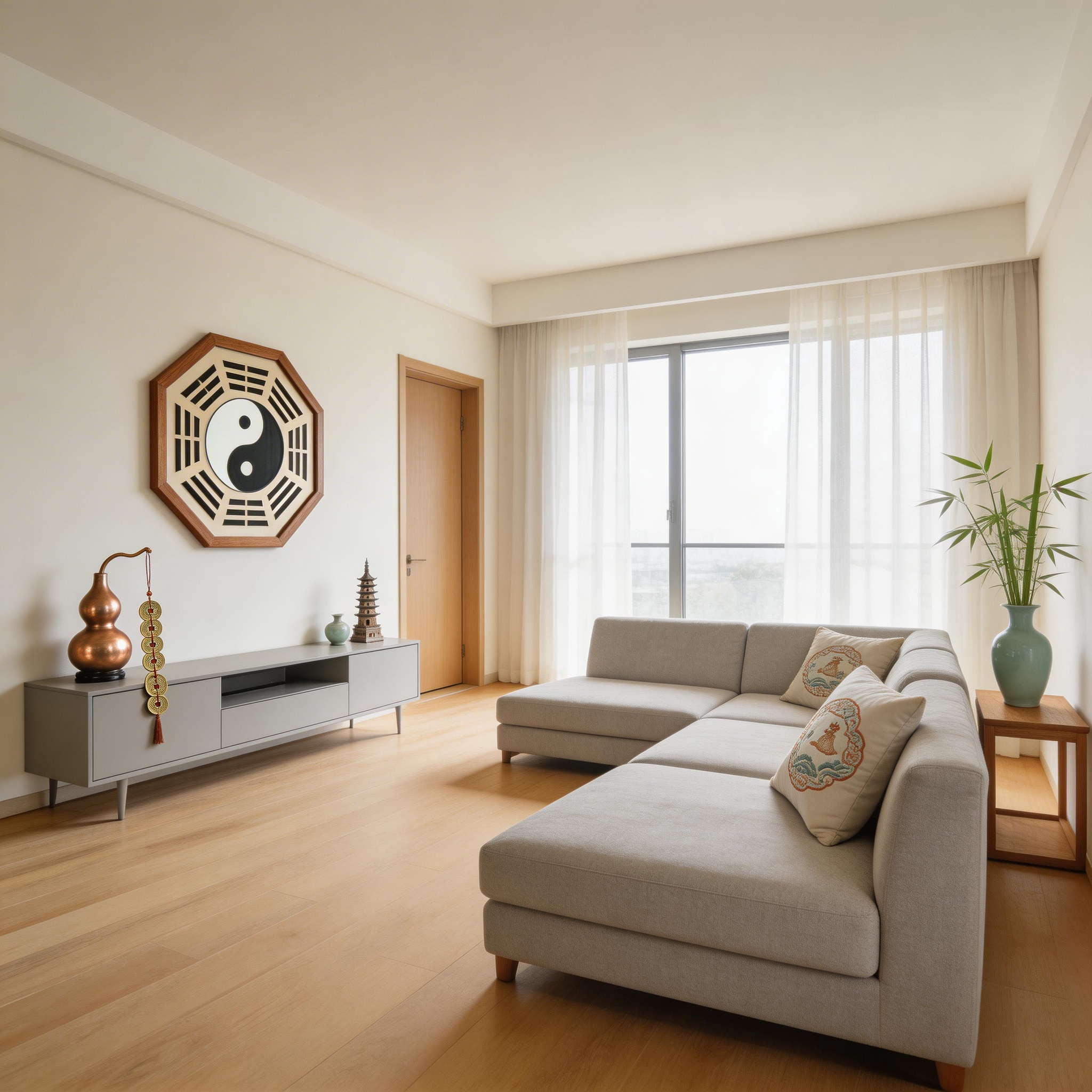
Feng shui is a product of the combination of ancient Chinese environmental philosophy and daily life practices. It is not merely about "placing objects," but a complete system of spatial energy, with "qi" as its core concept.
"Qi" is not simply air, but a kind of life energy that flows, gathers, and changes in space. The ancients said, "Where there is qi, there is life; where there is no qi, there is death." The purpose of feng shui is to adjust the environment to allow qi to flow smoothly and stay in a reasonable manner, thereby improving the physical and mental state and life fortune of the residents.
I. The Relationship Between Atmosphere and Environment
Feng shui emphasizes "gathering wind and water," where wind represents flow and water represents support. If the air flows too fast, energy cannot stay and the environment will appear scattered; if the airflow is blocked, it forms "stagnant energy," causing residents to feel depressed and make slow decisions.
Modern environmental psychology has also proven that spatial layout affects people's emotions and mental health. People are more likely to concentrate in clean, bright spaces; while oppressive, cluttered spaces are more likely to trigger anxiety and fatigue.
II. Yin and Yang and Spatial Energy
Feng shui emphasizes the balance of yin and yang.
Yang: Bright, dynamic, hot, open
Yin: quiet, gentle, calm
The living room is typically considered a yang location and should be well-lit, open, and well-ventilated; the bedroom is considered a yin location and should be quiet and peaceful, avoiding strong light and noise. A proper balance of yin and yang not only conforms to feng shui principles but also aligns with modern psychological requirements for environmental comfort.
III. The Five Elements and Residential Layout
Feng shui divides spatial energy into five elements:
Wood: representing growth and development, suitable for a study.
Fire: Passion, fame, suitable for living rooms or showrooms.
Earth: stable and safe, suitable for bedrooms
Gold: Decision-making, management; suitable for office areas.
Water: flow, wealth, suitable for the wealth corner and entryway.
The five elements (metal, wood, water, fire, and earth) interact in a cycle of mutual generation and restraint, which determines the spatial layout and energy flow. For example, the wealth corner should be decorated with water-elemental items, but not near fire-elemental areas, to prevent the dissipation of wealth energy.
IV. The three core elements of a residence: door, bed, and stove
- Door : an air vent, the entrance for air. Doors should not face stairs, elevators, or toilets directly to avoid foul air rushing in.
- The bed is the core of a person's magnetic field. The headboard should be against something, avoiding beams overhead or direct contact with doors and windows, to ensure sleep quality.
- Stove : The source of wealth for the family. The kitchen should have a back wall and should not be facing the toilet or sink to maintain a balance between fire and water.
These three points directly affect the stability of the family's energy field and the direction of its fortune, and are the key points of feng shui arrangement.
V. Feng Shui and Modern Life
Feng shui is not a "mysterious force," but rather a long-term environmental management strategy. Reasonable feng shui adjustments include:
Maintain ventilation and lighting
Smooth traffic flow
Clean and tidy space
The furniture and decorations are arranged in a reasonable manner.
Through these adjustments, the spatial energy field stabilizes, placing people in a state more conducive to realizing their potential.
Summarize
The core of Feng Shui lies not in objects, but in the interaction between Qi (energy), space, and the environment. A correct understanding of Feng Shui can improve your living comfort, enhance your mental state, and provide favorable conditions for your life's fortune.
Related Articles
Continue Learning
Next Article