Five taboos in bedroom feng shui: Why are you still tired even after sleeping for 8 hours?
Author FateAstro Expert Team
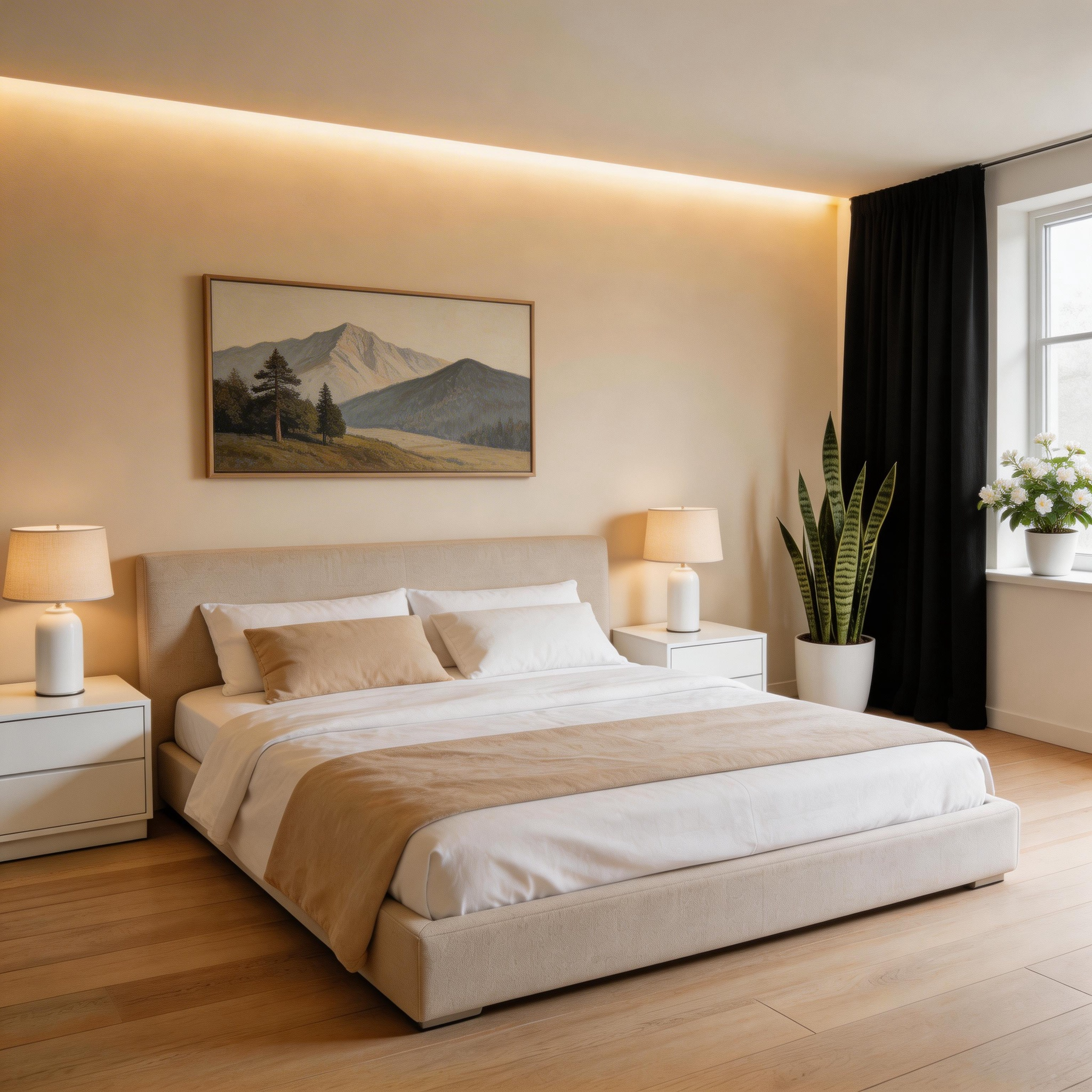
In traditional Chinese Feng Shui, the bedroom is considered one of the most important spaces in a house. People spend a third of their time there each day, so the energy field of the bedroom directly affects a person's mental state, physical health, and emotional stability.
Many people notice a strange phenomenon: even though they sleep seven or eight hours a day, they still feel tired, anxious, or even depressed when they wake up. Besides life stress and sleep patterns, the feng shui layout of the bedroom may also be a contributing factor.
The most common feng shui problem is having the bed facing the bedroom door. In feng shui, this arrangement is called "door-facing sha" (冲门煞). The door is the passageway for airflow; when the bed faces the door, the airflow directly impacts the body, making people prone to restlessness, light sleep, and vivid dreams. The correct bed position should allow a view of the door, but not be in a straight line with it.
The second common problem is that the head of the bed is not against a wall. Feng shui emphasizes having "a mountain to lean on," and having the head of the bed against a wall symbolizes stability and security. If the head of the bed is suspended in the air or against a window, it can easily create a subconscious sense of insecurity, thus affecting sleep quality.
The third problem is the presence of a beam above the bed. In traditional Feng Shui, a beam overhead is considered an unfavorable feng shui arrangement. Sleeping under a beam for a long time can create a feeling of oppression, easily leading to mental tension and restless sleep.
The fourth problem is having too many mirrors in the bedroom. Especially mirrors directly facing the bed are considered in Feng Shui to disrupt the energy flow. The reflective properties of mirrors amplify the energy in the space, potentially leading to restless sleep or mood swings.
The fifth problem is too much clutter in the bedroom. A messy environment causes the energy flow to stagnate, which is called "turbid energy" in Feng Shui theory. When the energy cannot flow smoothly, people will feel depressed and tired.
Improving bedroom feng shui is actually not complicated. Keeping the room clean, adjusting the bed's position, using soft lighting, and choosing comfortable color schemes can all help enhance the energy of the space.
Feng shui is not a mysterious superstition; rather, it is a wisdom about the relationship between environmental energy and people. When the living environment is more harmonious, people naturally feel more relaxed and energetic.
Related Articles
Continue Learning
Next Article